Speakers

Alex van Someren

Wenmiao Yu

Phillip Burr

Speaker Session
While AI dominates headlines, compute innovation is diversifying. Distinct markets are emerging for data centre training, inference, and edge computing, each requiring specialised solutions. Beyond AI, we are seeing a resurgence in CPU innovation and ultra-low latency optical architectures, while quantum computing nears commercial viability. The UK is well-positioned to lead, boasting a rich history of innovation and over 200 semiconductor design teams. The challenge lies in leveraging these domestic strengths within a global landscape currently controlled by a few massive vendors and customers.
|
Wenmiao Yu, Co-Founder, Director of Business Development, Quantum Dice Ltd. |
|
Phillip Burr, Head of Product, Lumai |
|
Chris Smith, SVP Software, Fractile |

Alex van Someren FREng FIET is a British engineer and cybersecurity expert who has been a key figure in the UK's technology sector, in venture capital and in national security. He is currently the Executive Chair of Vancouver-based Quantum Computing company Photonic, Inc.
His career began at Acorn Computer in the 1980s, where he contributed to developing the BBC Microcomputer and the Acorn Electron. He then co-founded several technology companies, two of which became public through IPOs on the London Stock Exchange, ANT Software plc (AIM:ANTP) and nCipher plc (LSE:NCH), both later acquired.
Alex served as a Managing Partner at venture capital firm Amadeus Capital Partners from 2010 to 2021, focusing on early-stage investments in ‘deep technology’ across the UK and Europe.
In 2021, he was appointed as the UK's Chief Scientific Adviser for National Security, providing independent scientific advice to the UK Intelligence Agencies and to wider UK government. During this period, he also served as a consultant to the €1 Billion NATO Innovation Fund.
Alex is a Fellow of the Royal Academy of Engineering, a Fellow of the Institution of Engineering and Technology and an Honorary Professor of Computer Science at the University of Manchester. He was previously the Clore Innovation Professor at the Royal College of Art.
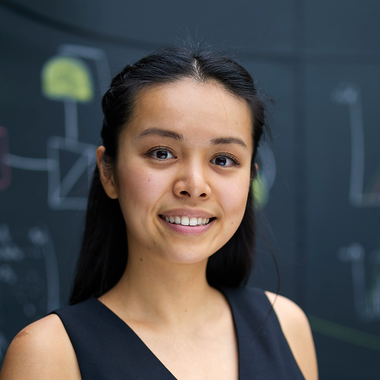

Phil is Head of Product at Lumai, the optical computing company developing highly energy-efficient AI acceleration for the inference era. With more than 25 years of experience in global product management, go-to-market strategy, and technology, Phil has held senior roles at leading semiconductor and technology companies including Arm, Indie Semiconductor, Mentor Graphics (now Siemens) and TTP. He has a track record of building and scaling innovative products and services.