Speakers

Caroline O’Brien

Mark Rushworth

Jon Heffernan

Speaker Session
Are the performance gains still sufficient to justify further investment? With R&D taking place across a range of semiconductor materials, how will material choices be made, and which are ultimately likely to succeed in the market? This could span CS, 2D materials and rare earth metals for semiconductors, devices, interposers, substrates, gratings and heatsinks. How will this expertise help accelerate and support quantum solutions?
|
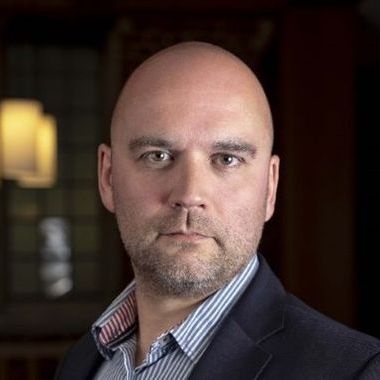
Mark Rushworth, CEO, Finchetto |
|
Professor Jon Heffernan FREng, Director, National Epitaxy Facility, University of Sheffield |
|
Dr Rodney Pelzel, Chief Technology Officer & Chief Operating Officer, IQE plc |

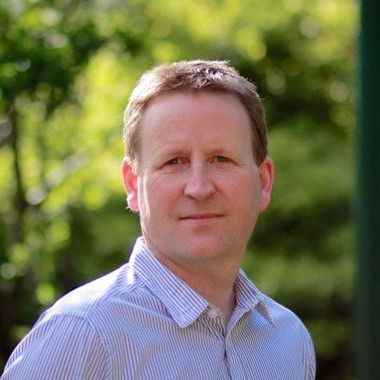
Jon Heffernan is Professor of semiconductor materials and devices at the University of Sheffield. He is concurrently Director of the EPSRC National Epitaxy Facility. Prior to joining the University of Sheffield he spent eighteen years in industrial R&D as Director of Advanced Optoelectronics at Sharp Laboratories of Europe, a division of Sharp Corporation. There he worked with teams in Japan, Europe and the USA on the development of semiconductor lasers, LEDs, nanomaterials, and solar cell technologies, taking low-TRL research through to mass manufacturing.
Professor Heffernan’s research is now focussed on novel semiconductor materials, semiconductor manufacturing technologies, and quantum technologies based on semiconductor nanomaterials. He is a co-founder of two University of Sheffield spin-out companies and has served on a number of advisory boards for semiconductor technologies.
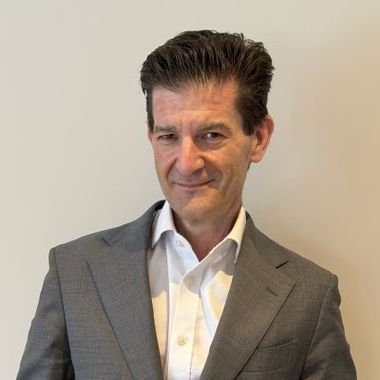
Dr Pelzel is Chief Technology Officer and Chief Operating Officer at IQE plc, responsible for technology strategy, operations, and the development and scale-up of advanced semiconductor materials solutions.
He has over 25 years of experience in compound semiconductor materials engineering and epitaxial growth and is a recognised expert in advanced applications. He holds more than 30 patents and is a widely published author in the field.
Dr Pelzel joined IQE in 2000 as a Production Engineer and progressed through a series of engineering and operational leadership roles, scaling leading-edge technologies for wireless applications. In 2012, he was appointed Head of R&D, where he led the development of differentiated materials platforms and new product introductions across the Group.
He has played a central role in establishing IQE as a global leader in advanced semiconductor materials, building one of the industry’s broadest technology portfolios.
Dr Pelzel holds a BS in Chemical Engineering from the University of Colorado and a PhD from the University of California, Santa Barbara. He is a Chartered Engineer, Chartered Scientist, and a Fellow of both the Royal Academy of Engineering and the Institution of Chemical Engineers.