
As the wireless industry increasingly focuses on AI-enabled digital technologies, it is important not to overlook the analogue RF technologies that underpin every wireless connection. The performance of antennas, filters, low-noise amplifiers and other RF front-end components, together with the ability to accurately predict radio propagation, ultimately places fundamental limits on spectrum efficiency, energy efficiency and user experience.
Join the Cambridge Wireless Radio Technology Special Interest Group (SIG) for a half-day event exploring the technologies and innovations that will enable the next generation of wireless connectivity. Bringing together experts from industry and academia, the event will showcase advances in RF engineering and propagation modelling that could help networks make more efficient use of spectrum, reduce interference, enhance energy efficiency and support increasingly demanding connectivity requirements.
The programme will explore innovative approaches to:
- Propagation and coverage – enhanced propagation prediction and modelling tools, embedding 3D full-polarimetric antenna characteristics, to improve network planning, coverage.
- Interference mitigation – technologies and techniques for managing co-channel and adjacent-channel interference in increasingly congested spectrum environments.
- Frequency agility – advanced RF technologies enabling greater flexibility in how wireless systems access and utilise spectrum.
- RF front-end innovation – developments in antennas, filters, low-noise amplifiers and interference suppression technologies to improve radio performance and potentially facilitate spectrum sharing.
- Transmitter linearity and out-of-band emissions – approaches to controlling unwanted emissions while maintaining or improving energy efficiency.
- Energy-efficient wireless systems – RF technologies that can contribute to more sustainable, resilient and energy-efficient network deployments.
As spectrum becomes increasingly valuable and wireless systems continue to evolve, advances at the RF and propagation layers will be critical to delivering the performance, flexibility and efficiency required by future networks.
Kindly hosted by Ofcom at its London office.
Radio Technology SIG Champions
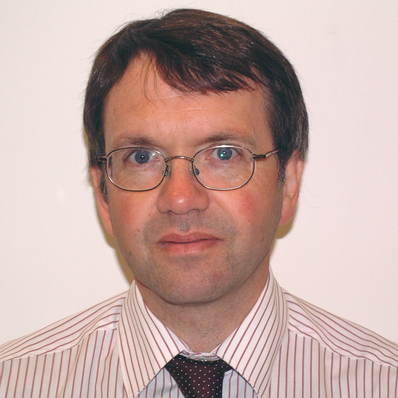
Professor Mark Beach
Mark Beach received his PhD for research addressing the application of Smart Antenna techniques to GPS from the University of Bristol in 1989, where he subsequently joined as a member of academic staff. He was promoted to Senior Lecturer in 1996, Reader in 1998 and Professor in 2003. He was Head of the Department of Electrical & Electronic Engineering from 2006 to 2010, then spearheaded Bristol’s hosting of the EPSRC Centre for Doctoral Training (CDT) in Communications. He is the Co-Director of this centre. He leads research in the field of enabling technologies for the delivery of 5G and beyond wireless connectivity; which includes the recent award of an EPSRC Prosperity Partnership in the field of Secure Wireless Agile Networks (SWAN). Mark’s current research activities are delivered through the Communication Systems and Networks Group, forming a key component within Bristol’s Smart Internet Lab. He has over 30 years of physical layer wireless research embracing the application of Spread Spectrum technology for cellular systems, adaptive or smart antenna for capacity and range extension in wireless networks, MIMO aided connectivity for through-put enhancement, experimental evaluation and optimization of Massive MIMO, Millimetre Wave technologies as well as flexible RF technologies for SDR modems. With a strong industrially focused research portfolio, he is also the School Research Impact Director.

John Campbell
John is an electronic systems engineer who specialises in low power embedded systems, RF and audio.
He currently leads Hardware Applications Engineering for the Qualcomm family of Bluetooth and WiFi audio Systems on Chip (SoC). At Qualcomm he has worked with a wide range of flagship brands and ODMs to take their wireless audio products from inception to mass production. In addition to supporting design in of existing products he also works closely with teams defining and developing next generation devices. His experience prior to Qualcomm includes developing real time embedded software for hydraulic wind turbine transmissions and applications engineering for AMS range of environmental sensors.

Brian Collins
Brian has designed antennas for applications including radio and TV broadcasting, base stations, handsets and consumer products, and has operated his own consultancy firm for the last 12 years. He has published more than 70 papers on antenna topics and contributed chapters to several recent textbooks. He operates a small consultancy company, chairs the Antenna Interface Standards Group and is an Honorary Visiting Professor in the School of Electronic Engineering and Computer Science at Queen Mary, University of London.

Dr Paul Harris
Paul is a wireless technology expert with experience across a range of areas including research, design, implementation and standardisation. He received his PhD from the University of Bristol for evaluating the performance of massive MIMO technology in the lead-up to 5G and is currently a Principal Wireless Architect within the CTO Office at VIAVI Solutions providing thought leadership on new and emerging technologies for 5G, 6G and beyond. In line with this he represents VIAVI within a range of bodies and fora including 3GPP, the O-RAN Alliance, ETSI, the Next G Alliance, the 6G-IA and the UKTIN. His experience prior to joining VIAVI includes representing Vodafone within 3GPP for radio performance aspects, contributing to the development of massive MIMO channel estimation solutions at Cohere Technologies, and working with customers as a domain expert at National Instruments to establish effective research solutions using software-defined radio. He is also a Chartered Engineer, Senior Member of the IEEE, Fellow of the ITP, and an Honorary Industrial Fellow at the University of Bristol.
- X:
- pharris8711
- LinkedIn:
- https://www.linkedin.com/in/pharris8711/
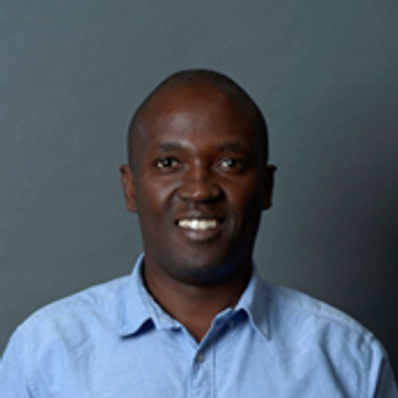
Peter Kibutu
Peter has over 15 years of experience in the cellular industry, specialising in modem system architecture and physical layer development. He has contributed to the development of 2G, 3G, and 4G wireless modem products as well as small-cell base station projects for leading cellular equipment vendors. More recently, Peter has worked as a 5G NTN consultant at TTP plc.
Throughout his career, he has worked with a wide range of clients in both the satellite and cellular communication domains, with expertise spanning end-to-end system engineering, modem system development, and commercial advisory. In addition, he has actively contributed to 5G NTN standardisation as a 3GPP delegate.
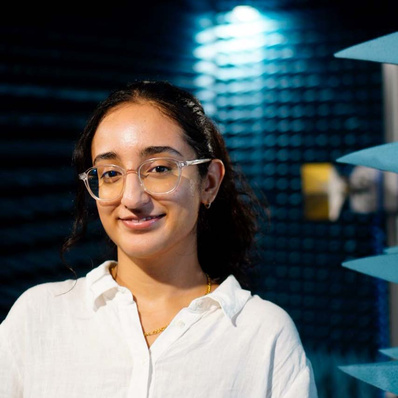
Riya Sharma
Riya holds an master’s in Physics with Astrophysics from the University of Warwick, with specialisms in satellite communications and radio astronomy. Currently, she works as a Satellite and Space Consultant at TTP, where she currently specialises in 5G NTN antenna design & deployment, space payload verification & testing and quantum sensing & communications.
- LinkedIn:
- https://www.linkedin.com/in/riyasharma22
Related events

Early Bird Tickets

Early Bird Tickets