This Academic & Industry SIG event will share the latest research from our UK Universities to explore how we shape and deliver secure connectivity, advanced network systems, and cloud integration
This event is now fully booked and we are operating a waiting list.
As communications ecosystems evolve, they are expected to span seamlessly from ultra-small edge devices to massive cloud infrastructures. With the emergence of international 6G standards, there will be a shift from simply connecting people and devices to enabling pervasive, interconnected intelligence. This evolution depends on communications infrastructures that are safe, secure, trustworthy, and sustainable.
This event will share the latest research from our UK Universities to explore how we shape and deliver secure connectivity, advanced network systems, and cloud integration
This event is kindly hosted by University of Leeds. As part of this event, we have a limited capacity guided tour of their research labs, so early registration is advised.
Academic & Industry SIG events aim to bring together universities and companies to share knowledge, strengthen research, promote technological advancement and nurture the next generation of tech talent. These events give academic experts and research students a platform in which to showcase their latest findings. They also give companies the opportunity to understand the breadth of work taking place in UK Universities and pave the way for ongoing, mutually beneficial, academic and industry collaboration.
This event is free and open to all.

Michaela Eschbach, CEO of Cambridge Wireless
Welcome from our host
‘Cognizant Convergent Connectivity and the CHEDDAR Hub’
‘Agentic AI Empowered 6G Wireless Networks’
Power-Efficient 6G Radio Unit Architectures

Professor of Computer Systems, Co-Director of the School of Convergence Science in Space, Security and Telecoms, Director of the national CHEDDAR communications research hub., Imperial College London


School of Electrical and Electronic Engineering, University of Sheffield

Associate Professor of Communication and Sensing, , School of Electronic and Electrical Engineering, University of Leeds
Research Technologist, United Kingdom National Nuclear Laboratory
Antonio is a Research Technologist in the Instrumentation and In-situ Analysis team. He is working on several aspects of instrumentation development, focusing on wireless communications for nuclear decommissioning environments and the use of digital technologies. During his PhD project on Wireless Communications in Nuclear Decommissioning Environments he gained essential digital skills for the deployment of wireless technologies in nuclear environments. He focused on the radio frequency propagation and data transmission through reinforced concrete wall structures and the radiation tolerance of electronic components. Antonio joined United Kingdom National Nuclear Laboratory after completing his PhD project at the Centre for Innovative Nuclear Decommissioning (CINDe) in 2020. His research involved the design, prototyping and experimental evaluation of wireless sensing systems to support decommissioning activities and to provide remote sensing capability in nuclear material storage facilities. Antonio is an active member of the Nuclear Institute and European Nuclear Society Young Generation Network (ENS-YGN). He is a member of the European Nuclear Society - High Scientific Council and University Liaison for the North West Branch - Nuclear Institute.
Professor of Radio Frequency Engineering, University of Leeds
Kevin Morris received the B.Eng. and Ph.D. degrees in electronics and communications engineering from the University of Bristol, Bristol, U.K., in 1995 and 2000, respectively. He is currently a Professor of Radio Frequency engineering and Head of the School of Electronic and Electrical Engineering at the University of Leeds. He has authored or co-authored over 130 academic papers, and he holds five patents. His research principally concerns looking at methods of reducing power consumption in communications systems with specific interest in the design of efficient frequency flexible transceivers. He is currently involved with several industrial and Engineering and Physical Sciences Research Council (EPSRC) research projects. He was the Head of the Department of Electrical and Electronic Engineering at the University of Bristol from 2014 to 2018.
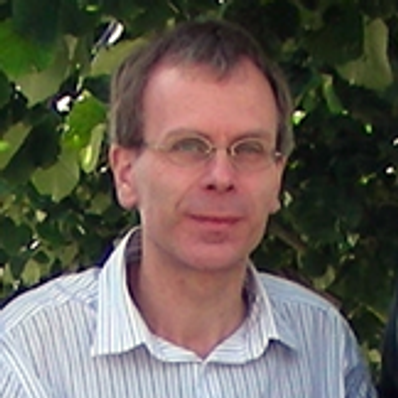
Associate Professor, Digital Technology Group, Computer Laboratory, University of Cambridge
Dr Ian Wassell joined the University of Cambridge Computer Laboratory as a Senior Lecturer in January 2006. Prior to this, he was with the Department of Engineering for six years. He received the PhD degree from the University of Southampton in 1990 and the BSc., BEng. (Honours) Degrees (First Class) from the University of Loughborough in 1983. He has in excess of 25 years experience in radio communication systems gained via positions in industry and academia and has published more than 200 papers. His research interests include broadband wireless networks, wireless sensor networks, radio propagation, coding, communication signal processing, compressive sampling, and image processing and classification.

Professor of Computer Systems, Co-Director of the School of Convergence Science in Space, Security and Telecoms, Director of the national CHEDDAR communications research hub., Imperial College London
Julie A. McCann is a Professor of Computer Systems with Imperial College London and is currently Co-Director of the School of Convergence Science in Space, Security and Telecoms and Director of the national CHEDDAR communications research hub. Formerly Vice Dean Research in the Faculty of Engineering, she has published extensively on decentralized and self-organizing scalable algorithms and protocols for Wireless/RF Sensor-based systems, Internet of Things, and Cyber-physical systems. She leads the Adaptive Emergent Systems Engineering Research (AESE) research group, and between 2015-2022 was the Deputy Director of PETRAS IoT Cybersecurity Hub, Critical Ecosystems Lead for the Alan Turing Institute, and Imperial PI on the EPSRC programme grant Science for Sensor Systems Software. She has a number of international research collaborations including Singapore NRF funded Eco-Cities (until March 2024 she had a sub-lab in Singapore with I2R and HDB), between 2012-2017 directed the Intel Collaborative Research Institute (ICRI) for Sustainable Cities, and NEC Japan on smart communications technologies, as well as other projects though EU FP7/H2020 programmes. McCann is an elected Member of the Council of Computer Science Professors and Heads of Computing, and was elected to the membership committee of the UKCRC, she holds the 2018 UKRI Suffrage Science Award for Computing and Mathematics, President’s Medal for Research Excellence 2020, and is a Fellow of the BCS and Chartered Engineer.
Prof Julie McCann, Department of Computing, Faculty of Engineering, Imperial College London Wednesday @ 1:15 PM

University of York
David Grace received his PhD from University of York in 1999, with the subject of his thesis being ‘Distributed Dynamic Channel Assignment for the Wireless Environment’. He has been a member of staff at the University since 1994 and he is now Professor (Research). He leads the Communication Technologies Discovery Theme and Challenging Environments Translational Theme within School of Physics, Engineering and Technology. He is also Director of the Centre for High Altitude Platform Applications and pillar lead for Advanced Communications within Institute for Safe Autonomy. Current research interests include non-terrestrial networks, aerial platform-based communications, application of artificial intelligence to wireless communications; 6G system architectures; dynamic spectrum access and interference management. He is currently leads the EPSRC HiQ project, developing quantum key distribution via high altitude platforms. He is a recent lead investigator on H2020 MCSA SPOTLIGHT, UK Government funded MANY, dealing with 5G trials in rural areas. He was technical lead on the 14-partner FP6 CAPANINA project that dealt with broadband communications from high altitude platforms. He is an author of over 280 papers, and author/editor of 2 books. He is the former chair of IEEE Technical Committee on Cognitive Networks for the period 2013/4. He is a founding member of the IEEE Technical Committee on Green Communications and Computing. From 2014-8 he was a non-executive director of Stratospheric Platforms Ltd. In 2000, he jointly founded SkyLARC Technologies Ltd, and was one of its directors.
Panel Session: Lab of the North Wednesday @ 3:50 PM

CTO, Wi-Fore
For the past thirty years Nick has been closely involved with short range wireless and communications, designing technology that helps to bring mobility to products, particularly in the areas of telematics, M2M, IoT, wearables, smart energy and mobile health. He is closely involved with the Bluetooth SIG, the Continua Alliance and other medical and wireless standards bodies. He is the author of 'The Essentials of Short Range Wireless' - a book attempting to explain the application of wireless technology to product developers.Nick Hunn, CTO, WiFore Consulting Wednesday @ 2:50 PM

School of Electrical and Electronic Engineering, University of Sheffield
I received my BSc degree in Electrical and Electronic Engineering from the University of Birmingham and my MSc and PhD degrees in Electrical and Electronic Engineering from the University of Manchester.
I am the Chair Professor in Wireless Communication at the University of Sheffield and I am a Fellow of the Royal Academy of Engineering (FREng).
In the field of wireless communications, I have made significant contributions to waveform and energy-efficiency design for radio access networks (RANs) and I have translated significant research into industry through standards, products, and practices.
My research is focused on wireless communications systems, specialising in radio systems engineering, physical layer signal processing, and energy-efficient (EE) wireless networking.
As Co-Founder and CTO of Supergold Communication Limited, I accomplished strategic breakthroughs in determining the IEEE802.11g Wi-Fi standard. Also, I have developed standardised practices for measuring EE in RANs and produced software-tools for modelling RAN performance.
I have led 27 major research projects with a total research spend of approximately £29M. I led the UK Research Strategy Community Organisation in Communications, Mobile Computing and Networking within the Engineering and Physical Sciences Research Council portfolio (CommNet II, EP/N007824/1) and currently, I am the director of the UKRI National 6G Radio Systems Facility (EP/X030016/1).
Professor Tim O'Farrell, Department of Electronic and Electrical Engineering, University of Sheffield Wednesday @ 3:20 PM

Associate Professor of Communication and Sensing, , School of Electronic and Electrical Engineering, University of Leeds
Syed Ali Raza Zaidi Member, IEEE is an Associate Professor at the University of Leeds in the broad area of Communication and Sensing for Robotics and Autonomous Systems. He co-leads the UK’s Department for Science, Innovation and Technology (DSIT) and UKRI-funded Future Communications Hub for Empowering Distributed Cloud Computing Applications and Research (CHEDDAR), which has received £16 million in research funding. He also leads the Emergent Compute Pillar within the CHEDDAR work programme, as well as DSIT- and AISI-funded initiatives on agentic AI for cloud-native telecommunications. Earlier, from 2013 to 2015, he was associated with the SPCOM research group, working on a US ARL-funded project in Network Science. From 2011 to 2013, he was a research associate at the International University of Rabat. He was also a visiting research scientist at Qatar Innovations and Mobility Centre from October to December 2013, where he worked on the QNRF-funded project QSON. He completed his doctoral degree at the School of Electronic and Electrical Engineering, where he was awarded the G. W. and F. W. Carter Prize for best thesis and best research paper. He has published over 90 papers in leading IEEE conferences and journals. From 2014 to 2015, he served as an editor of IEEE Communication Letters and as the lead guest editor for the IET Signal Processing Journal’s Special Issue on Signal Processing for Large-Scale 5G Wireless Networks. He has also served as lead editor for the IEEE Communications Magazine Feature Topic on Communication Technologies for Robotics and Autonomous Systems and for the IEEE Journal on Selected Areas in Communications (JSAC) Special Issue on Design and Analysis of Communication Interfaces for Industry 4.0. He is also an editor for the IET Access, Fronthaul, and Backhaul book series, and is currently an Associate Technical Editor for IEEE Communications Magazine. He is also the Industrial Sponsorship and Programme Chair for ICC 2026. He has been awarded grants from COST IC0902, the Royal Academy of Engineering, EPSRC, Horizon Europe, and DAAD (totalling approximately £5.5 million) to promote his research outputs. He has also been an invited keynote speaker and panellist at various leading international conferences and workshops. His current research interests include Generative AI for cloud-native telecommunications, as well as the modelling, analysis, and design of large-scale connected intelligent systems.
Dr Syed Ali Raza Zaidi, Associate Professor of Communication and Sensing, School of Electronic and Electrical Engineering, University of Leeds Wednesday @ 1:45 PM
Please accept {{cookieConsents}} cookies to view this content