
Cambridge Tech Week 2026 Launches in London with Discussion on the Future of Deep Tech Investment
Hosted by PwC and sponsored by SPRK Capital, the event provided an opportunity to preview this year's Cambridge Tech Week theme, How Deep Tech Changes the World, while exploring the challenges and opportunities shaping the future of science and technology-led businesses.
Opening the event, Warren Tucker, Partner and UK Cloud & Digital Lead at PwC, highlighted the scale of the UK's technology sector and the role that ecosystems play in driving innovation.
With technology now representing a £1.2 trillion sector of the UK economy, he emphasised that long-term value is increasingly created through collaboration between industry, academia, investors, entrepreneurs and policymakers.
Dominic Peasley, CEO of SPRK Capital, reflected on the role of capital in helping innovative businesses move from invention to impact.
Referencing the Cambridge Tech Week theme, he highlighted a shift in focus from asking "What can we invent?" to exploring how breakthrough technologies can be powered, deployed and scaled. He also stressed the importance of combining technology, talent and shared knowledge to accelerate growth.
Cambridge Tech Week CEO Michaela Eschbach then outlined the vision for the 2026 programme and the importance of Deep Tech to the future of the UK economy.
"Cambridge Tech Week matters because Deep Tech matters," she said, highlighting Cambridge's position as one of the world's leading Deep Tech ecosystems and the importance of collaboration in accelerating innovation.
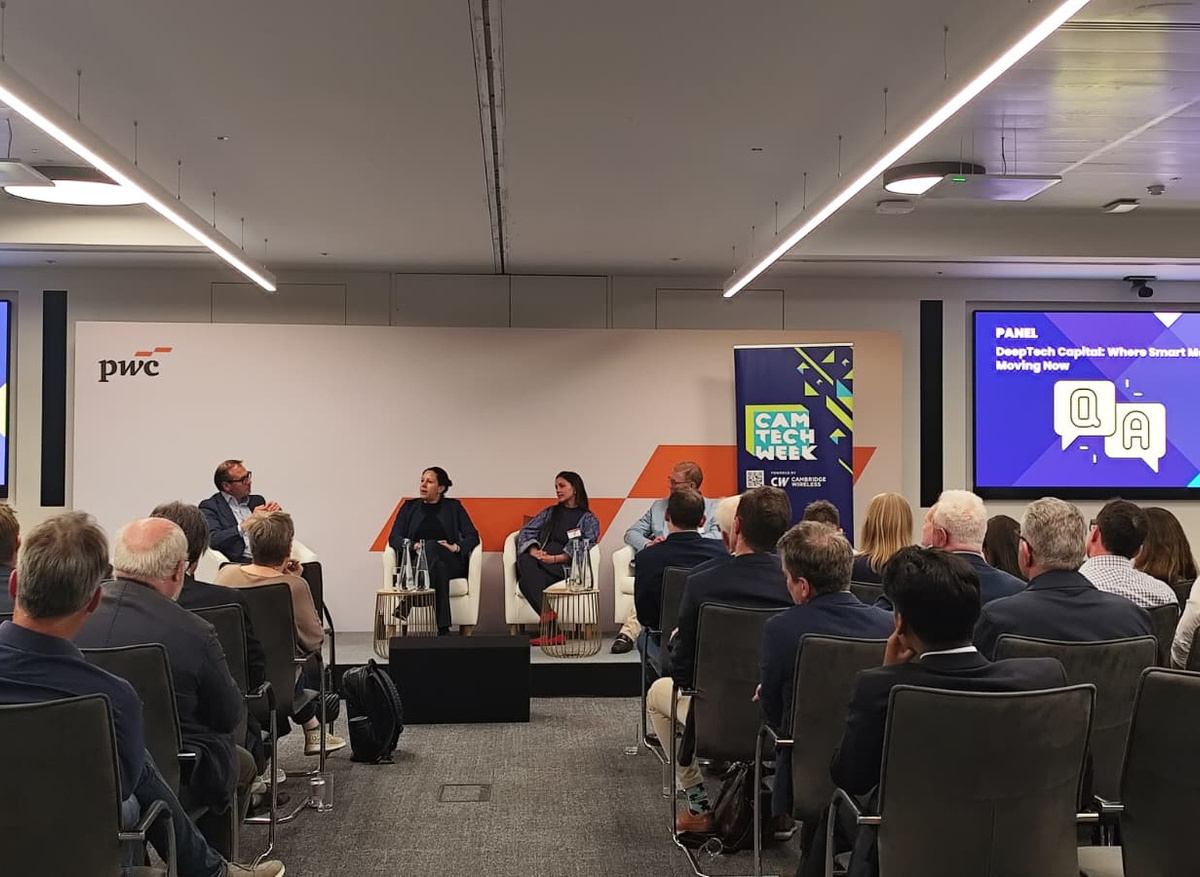
DeepTech Capital: Where Smart Money Is Moving Now
The centrepiece of the evening was a panel discussion exploring investment trends, growth opportunities and the future of Deep Tech businesses.
Chaired by Oli Barrett MBE, Co-Founder of The SuperScalers, the panel featured Priya Guha MBE, NED and Advisor; Max Bautin, Co-Founder and Managing Partner at IQ Capital; and Emilie Syed, Principal at Zinc.
The discussion challenged the common perception that Deep Tech is synonymous with artificial intelligence. Panellists highlighted the breadth of the sector, encompassing fields such as quantum technologies, robotics, engineering biology, advanced manufacturing, therapeutics, food systems, energy innovation and climate technologies.
A recurring theme throughout the discussion was that the UK does not suffer from a shortage of innovation, research excellence or technical talent. Instead, the challenge lies in helping companies commercialise their innovations, access markets, secure the right forms of capital and scale internationally.
The panel emphasised that Deep Tech companies often require patient capital, longer development timelines and different measures of progress compared with traditional software businesses. Investors must understand not only the science, but also the commercial milestones that demonstrate value creation and long-term potential.
Commercial traction emerged as another critical factor. While breakthrough technologies remain fundamental, panellists stressed that proof of market must sit alongside proof of concept. Success increasingly depends on a company's ability to identify customers, build partnerships and create clear routes to market.
The discussion also explored the importance of international ambition from the outset. While the US remains an important market, panellists highlighted growing opportunities across regions including India, Southeast Asia and Australia, encouraging founders to think globally from day one.
Cambridge itself was recognised as one of the UK's standout Deep Tech ecosystems. The panel highlighted the region's exceptional concentration of talent, world-leading research base, experienced founders, investors, science parks and culture of reinvestment as key factors behind its continued success.
Another key theme was the role of corporates in supporting innovation. Large organisations were encouraged to move beyond observing emerging technologies and instead become active participants through procurement, partnerships and customer relationships that help startups gain market access and scale.
The conversation also highlighted the growing connection between Deep Tech and national resilience, particularly in areas such as energy security, food production, advanced manufacturing, supply chains, defence and computing infrastructure.
Finally, panellists explored the importance of inclusion and cross-disciplinary collaboration, recognising that many of the next generation's most significant breakthroughs are likely to emerge at the intersection of technologies such as AI, biology, quantum, robotics, health and energy.
Looking Ahead to September
The London launch event marked the journey towards Cambridge Tech Week 2026, taking place from 14 to 18 September.
Bringing together entrepreneurs, investors, researchers, academics, technology companies and global industry leaders, Cambridge Tech Week will explore how Deep Tech is moving from research and discovery into real-world impact, and how collaboration across ecosystems can accelerate innovation on a global scale.
Registration for Cambridge Tech Week 2026 is now open.
CTW London Launch - 5