
Trustworthy AI From Principles to Critical Applications
Cambridge Wireless and the Advanced Computing Research Centre at Anglia Ruskin University came together on 9 June 2026 for a timely and highly relevant event exploring one of the most important questions facing organisations today: how do we move from talking about trustworthy AI to actually designing, deploying and governing it in practice?
Hosted at ARU’s Lord Ashcroft Building in Cambridge, the event brought together speakers from academia, industry, government, health tech, cyber security and AI governance. The day also marked the launch of ARU’s Advanced Computing Research Centre, making it a fitting moment to reflect not only on the promise of AI, but also on the responsibilities that come with using it in critical applications.
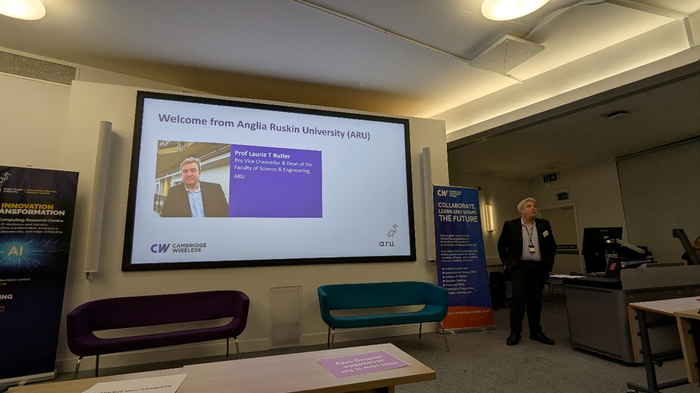
The event opened with a welcome from Professor Laurie T Butler, Pro Vice Chancellor and Dean of the Faculty of Science and Engineering at ARU. He set the tone by reminding the audience that trustworthy AI is not a single technical challenge. It brings together transparency, explainability, fairness, robustness, accountability, security, ethics and societal impact. He also highlighted that public trust will be central to the UK’s ability to benefit from AI-enabled services and productivity gains, and that real progress will require collaboration across academia, industry and policy.
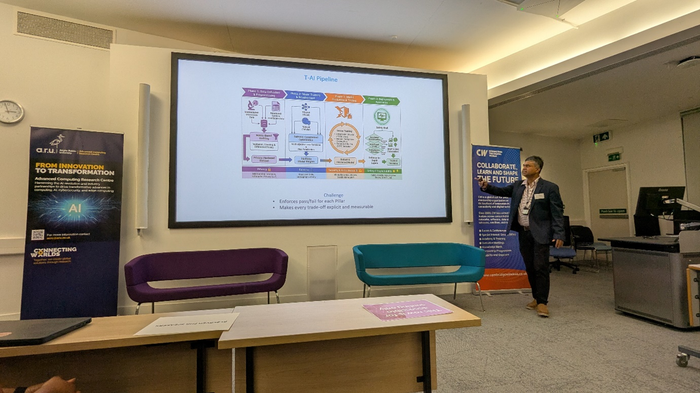
Professor Shareeful Islam then introduced a practical view of how trustworthy AI can be operationalised. His talk moved the discussion away from a narrow focus on accuracy and towards reliability, fairness, privacy, security, robustness, safety and explainability. A key message was that an AI model that performs well in a lab may still fail when placed into a real operational environment. Trustworthy AI, therefore, has to be built into the full pipeline, from data collection and model training through to deployment, monitoring and governance.
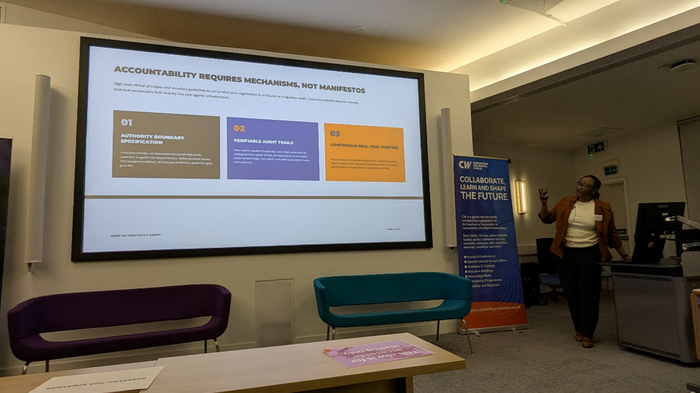
Linda Oraegbunam explored the question of accountability when AI agents act autonomously. As organisations move from generative AI tools towards agentic systems that can plan, decide and execute actions through APIs, the accountability challenge becomes much sharper. Her session highlighted the need to define clear authority boundaries for agents, create verifiable audit trails, and ensure real-time monitoring so that organisations can explain not only what an AI agent did, but why it was authorised to do it.
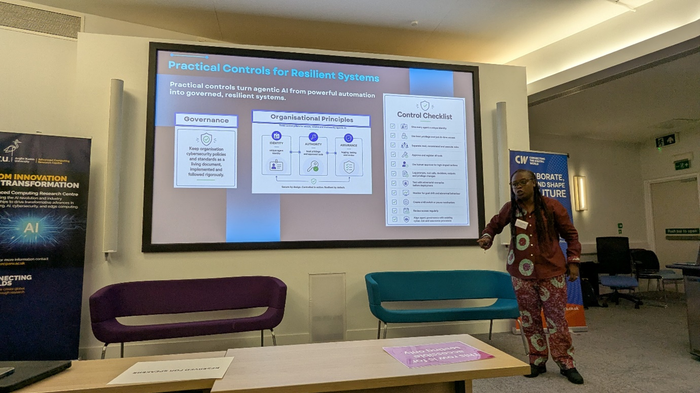
Felicia Omoediale-Samuel brought an industry perspective from cyber security and critical infrastructure. She explained how AI is already being used for triage, log analysis, threat intelligence, incident summaries, vulnerability prioritisation and operational decision support. The challenge is that multi-agent systems can also create new attack surfaces, where compromise at one point in the workflow can affect the whole chain of decisions. Her practical takeaway was that organisations should design for safe failure and graceful degradation from the start, asking basic but essential questions such as what the system can see, what it can do, what tools it can call, when a human must approve an action, and how the system can be stopped or reversed.
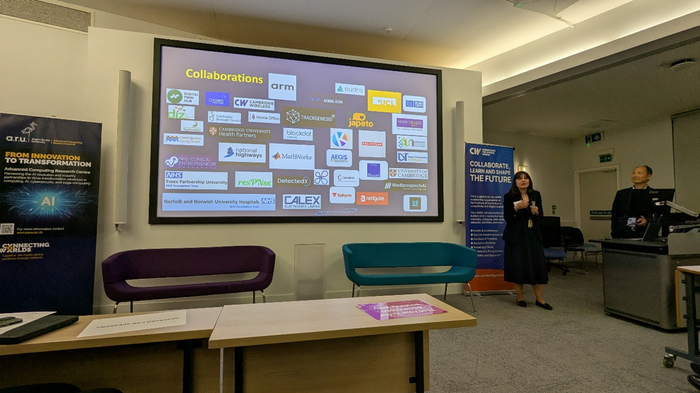
The launch of ARU’s Advanced Computing Research Centre was introduced by Professor Silvia Cirstea and Professor Yonghong Peng. The Centre brings together research across AI, computing, cyber security, advanced edge computing and systems, with a strong emphasis on interdisciplinary collaboration and real-world impact. The launch also underlined the importance of partnerships between universities, industry, government, the NHS and the third sector, particularly as AI systems become more embedded in everyday services and high-consequence environments.
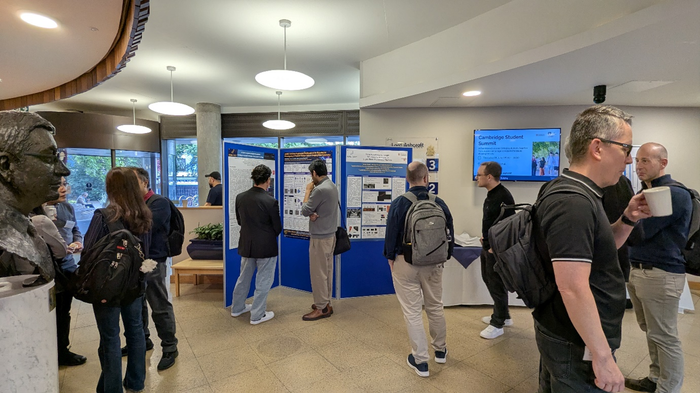
The lunch break also gave attendees an opportunity to explore the research poster session, where ARU researchers and students showcased work across AI, cyber security, advanced computing and applied digital technologies. It provided a useful bridge between the morning’s discussion on trustworthy AI principles and the practical research activity taking place within the university.
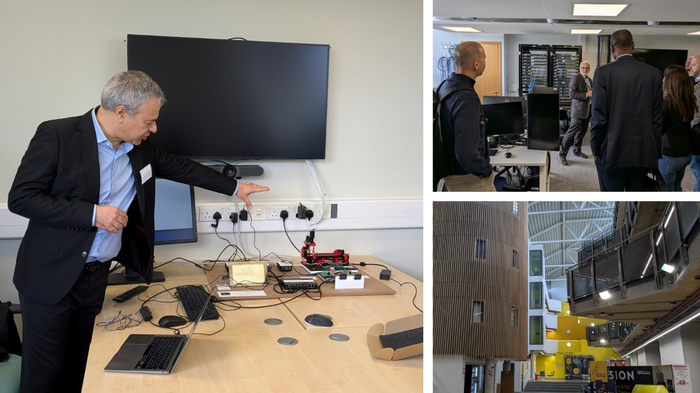
Optional lab tours offered a closer look at some of the facilities supporting ARU’s research in advanced computing and AI. These visits helped bring the launch of the Advanced Computing Research Centre to life, showing how the university is building the technical capability, research environment and collaborative spaces needed to support real-world innovation.
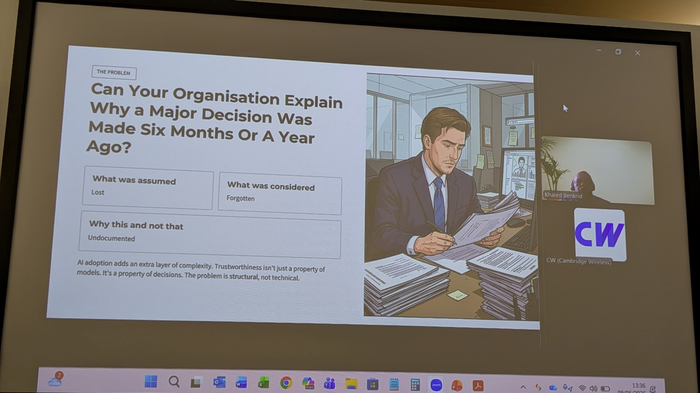
After lunch, Professor Khaled Benkrid discussed structured decision systems with agentic AI. He argued that while AI has transformed the way organisations generate and process information, decision-making itself often remains poorly structured and difficult to explain after the fact. His proposed approach was to make decision loops explicit, traceable and auditable, so that AI augments human judgement rather than replacing it. The central point was that trustworthy AI is not only about model behaviour. It is also about whether organisations can explain the reasoning behind the decisions they make.
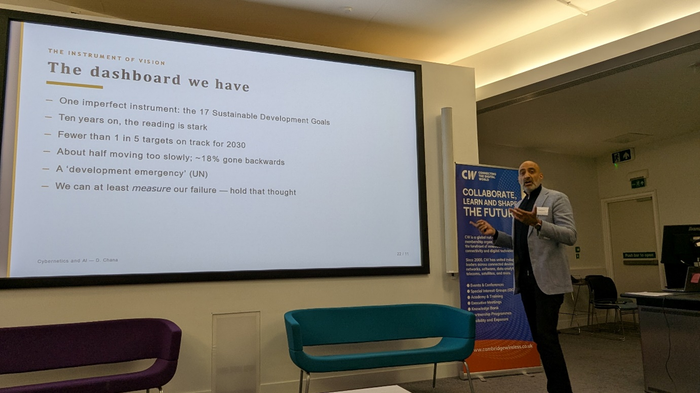
Professor Deeph Chana approached responsibility from a broader historical and philosophical perspective, linking today’s AI debate back to cybernetics and the long-standing relationship between science, technology and society. His talk challenged the audience to think carefully about what we mean by “responsible” AI. The same scientific capability can be used for positive or harmful purposes, and the choice of direction remains a human responsibility. For research institutions, this means not simply becoming knowledge factories, but acting as knowledge nurseries that take responsibility for the full value chain of ideas, including their social and moral consequences.
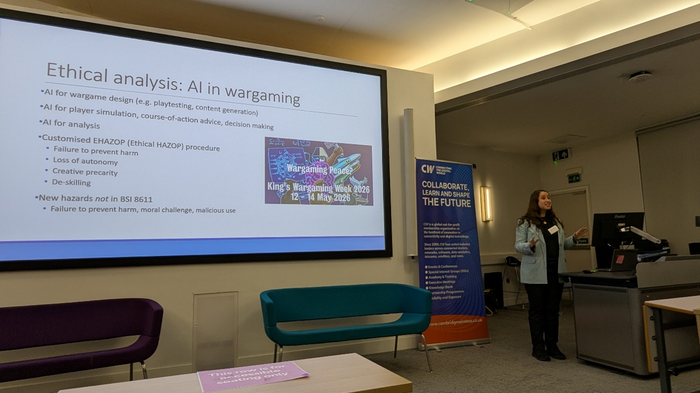
Dr Catherine Menon continued the ethics theme by examining the difference between safety and responsibility. Drawing on her experience with safety-critical systems, she explained why AI safety remains difficult to assure using traditional methods, particularly because machine learning systems can change behaviour in ways that challenge assumptions about fixed code, traceability and safety cases. Her talk stressed that ethics cannot simply be legislated into existence. Regulation matters, but responsible AI also requires human judgement, structured ethical analysis and a willingness to confront difficult moral questions.
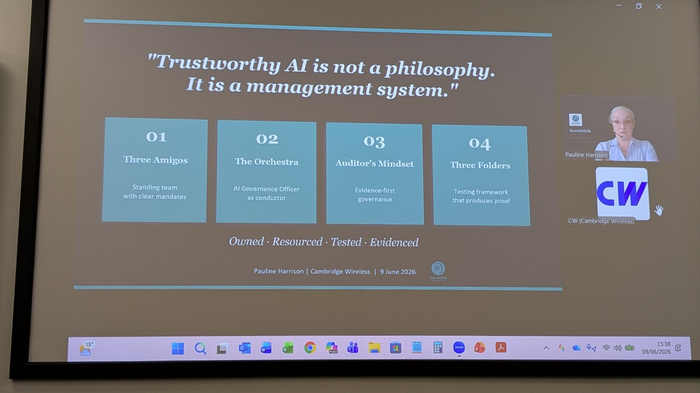
The final session, chaired by Dr Bob Oates, moved from principles into practical implementation. Pauline Harrison focused on the gap between AI governance policy and operational proof. Her message was that frameworks and principles are useful, but auditors and regulators ultimately need evidence. She described the importance of clear ownership, standing governance structures, human-led testing, red teaming and auditable records that show how risks were identified, tested and mitigated.
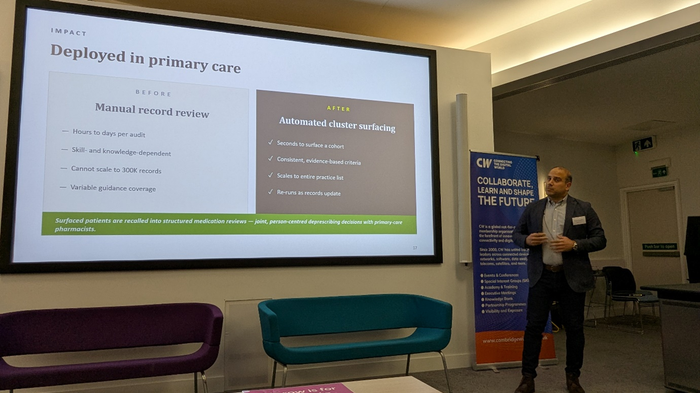
Dr Alireza Ettefaghian then presented a healthcare case study on medication safety and the detection of high-risk polypharmacy at population scale. His talk showed how unsupervised machine learning can be used responsibly to identify patients who may be at higher risk and prioritise them for clinician-led medication review. Importantly, the message was not that AI should replace clinicians, but that it can help surface risk more effectively and support better patient-centred care.
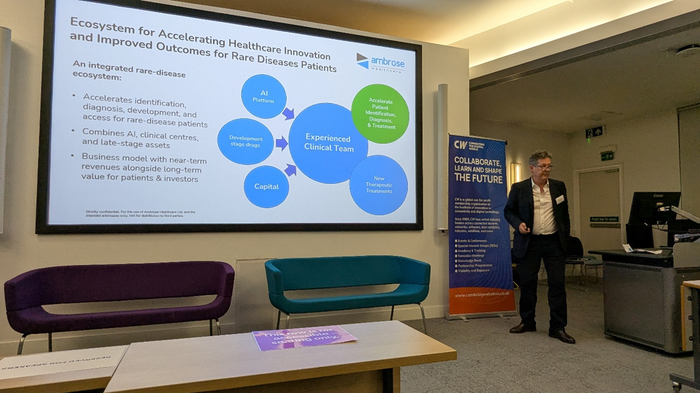
Toby Wilson Waterworth closed the speaker sessions with a presentation on rare diseases. He highlighted the scale of the challenge, noting that rare diseases collectively affect a significant proportion of the population while only a small percentage have approved drug therapies. His session explored how AI can assist with identification, diagnosis and treatment, including through better use of electronic health records, patient data, clinical insight and drug repositioning. It was a strong reminder that trustworthy AI is not only about avoiding harm. Used well, it can also help address areas of major unmet clinical need.
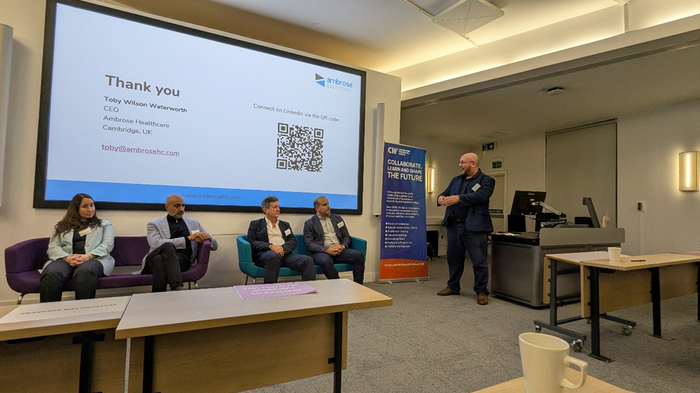
The panel discussion brought together many of the day’s themes, including access to data, regulatory barriers, healthcare adoption, responsibility, governance, skills and the need for stronger collaboration. A recurring point was that trustworthy AI will not be achieved by technology alone. It requires convening spaces where academia, industry, government, healthcare and other stakeholders can exchange knowledge, understand each other’s constraints and work together on practical routes to deployment.
Overall, the event showed that trustworthy AI is now moving from a conceptual debate into an operational challenge. The question is no longer whether AI can be useful in critical applications. The question is whether organisations can design, deploy, monitor and govern AI systems in ways that are transparent, accountable, safe, secure and beneficial. The launch of ARU’s Advanced Computing Research Centre provides a timely platform for exactly this kind of interdisciplinary work, and the collaboration with Cambridge Wireless demonstrated the value of bringing different communities together to address the challenge.