From data-driven models to resilient navigation: where AI meets PNT
Artificial Intelligence is advancing data-driven approaches to sensor fusion and state estimation, as well as downstream decision-making, but its role in Positioning, Navigation and Timing (PNT) remains unresolved.
This event will explore how modern AI techniques, including deep learning, probabilistic modelling, and emerging foundation models, are being applied to core PNT challenges such as signal processing, multi-sensor fusion, and navigation in GNSS-denied or degraded environments (e.g. indoor settings, urban canyons, or contested RF conditions).
Bringing together experts from academia, industry, and startups, the session will critically examine:
Attend to:
Who Should Attend?
This event is ideal for professionals and researchers working in:
Event Fees:
Employees of Cambridge Wireless member organisations can attend for free
Members of the Royal Insitute of Navigation can attend this event for free, to claim your free delegate place please email Clare Kettle.
Tickets for non-members are £50 plus VAT.
Lindsay Bliss, Membership Success Manager, CW
Dr Ramsey Faragher, Director of Royal Institute of Navigation & Cambridge Wireless SIG Champion
AI and Navigation: Don’t Shoot The Physicists
AI-Driven Resilient PNT: Enabling Trusted Navigation and Timing in Challenging Environments
Machine Learning Challenges in Navigation: Technical and Business
Robust and resilient AI for safety critical systems
Reinforcement learning-based adaptive control algorithm for PNT
IMU augmentation using Deep Learning
Before GNSS Fails: Lessons from Ukraine


Professor of Positioning and Navigation, University College London (UCL)


Professor of Signal Processing and Intelligent Systems in the Centre for Space Systems , Cranfield University

Until recently, David worked in the positioning technology (R&D) group at u-blox with a focus on hybrid positioning: bringing together GNSS with terrestrial systems such as UWB and V2X, primarily in support of future autonomous vehicle, driverless car and robotics applications but also for IoT and indoor positioning. Prior to this he was CTO and co-founder of Omnisense delivering high precision indoor IoT tracking solutions. He also worked at Cambridge Positioning systems with a focus on cellular positioning and network aided GNSS techniques.
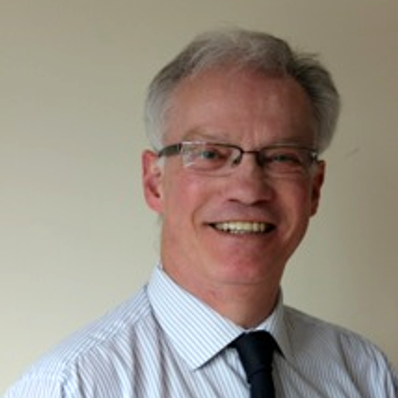
Knowledge Transfer Manager, Positioning, Navigation, Timing and Quantum, KTN
After 25 years in the space industry working mainly on electro-optical payloads, Bob has spent the last 13 years in the government-funded Knowledge Transfer Network, supporting business in position, navigation and timing, and more recently also quantum technology. Bob has taken a special interest in GNSS vulnerability, and has organised international conferences on vulnerability and its mitigation. Bob is a member of the Cabinet Office PNT Technical Group and chairs the Royal Institute of Navigation’s Technical Committee. Bob is a member of the International Time and Sync Forum Steering Group and is also a Cambridge Wireless Location Based Services SIG Champion.
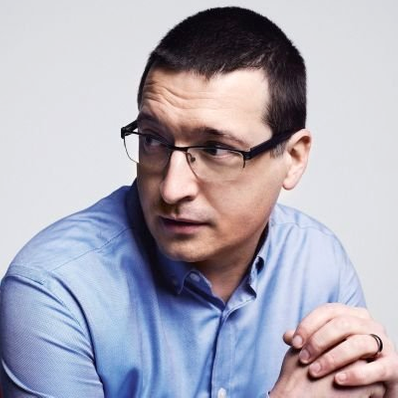
CEO and Director, The Royal Institute of Navigation (RIN)
Dr Ramsey Faragher is the Founder, and former President and CTO of Focal Point Positioning, a Fellow of the Royal Institute of Navigation, and a Fellow of Queens' College, at the University of Cambridge. He is the inventor of the Supercorrelation digital signal processing technique, which has redefined the state of the art in GPS positioning. He is the author of dozens of patents, and has been the recipient of numerous awards within the positioning and navigation ecosystem. His company is pioneering improvements to smartphone and automotive navigation systems, and in the past during his time in the Defence sector he has developed technologies that have been to the bottom of the ocean and all the way to Mars. He also helped to improve the bluetooth tracking capabilities of various globally-deployed contact tracing technologies during the Covid pandemic. He regularly contributes to technology podcasts, writes for Forbes, and has provided science advice for two television production companies. Ramsey lives with his family in Cambridge and is currently navigating the challenging landscape of having three small and adventurous children.
Senior Staff Engineer, Qualcomm Technologies International
Ben has worked in positioning for 15 years, developing algorithms for satellite, cellular and other terrestrial RF technologies. At Qualcomm, Ben works in the Advanced Algorithms group, where current research areas in location are data fusion, use of sensor data for positioning and fitness applications; one day, he hopes to be given the remit to explore the area of olfactory positioning. Ben has a background in Pure Mathematics and a PhD in Combinatorics. He has over 20 different patents filed or granted, mostly on subjects relating to positioning.


BootINS Ltd.
Robert Schoonmaker was awarded a PhD. in Computational Condensed Matter Physics from Durham University in 2018 for research performed with the Durham Emergence Project, a collaboration between physicists and philosophers. He led a team investigating the use of ML methods to enhance Pedestrian Motion Models at Focal Point Positioning until 2023. Now he independently building GPU-compatible tomography simulation code, to enable machine learning and complex scanning projects.Robert Schoonmaker, BootINS Ltd. Tuesday @ 2:45 PM

CEO, Silogic Technology
Stephen Clemmet is the founder of Silogic Technology and a Chartered Electronics Engineer with more than 30 years of experience in electronic systems design, EMC and applied technology development. His current work focuses on PNT integrity, including the detection and interpretation of GNSS jamming, spoofing and degradation in operational environments. Through Silogic Technology, he has developed and deployed systems used to gather real-world evidence, with the aim of improving early warning, operational understanding and resilience when GNSS cannot be fully trusted.
Stephen Clemmet, Silogic Technology Limited Tuesday @ 4:30 PM

CTO and co-founder,, RobNav
Iñigo Cortés received his M.Sc. degree in Telecommunication Engineering from the School of Engineering at the University of Navarra, San Sebastián, Spain, in April 2018. Since then, he has been working in the Satellite-based Localization Systems department at the Fraunhofer Institute for Integrated Circuits IIS (Fraunhofer IIS), Nuremberg, Germany. In September 2022, he was promoted to Senior Scientist at Fraunhofer IIS. He received his Ph.D. in Computing and Electrical Engineering from Tampere University, Finland, in June 2024. His doctoral research focused on signal processing methods for robust tracking and their implementation on resource-constrained hardware using hardware/software co-design techniques. He was awarded the ICT Dissertation Award 2025 by the Fraunhofer Group for Information and Communication Technology (IUK-Technologie). In July 2024, he co-founded RobNav, where he is the Chief Technology Officer (CTO), developing robust navigation, guidance, and control systems for aerospace and defence applications.
Dr. Iñigo Cortés, CTO and co-founder, RobNav Tuesday @ 4:00 PM

Professor of Positioning and Navigation, University College London (UCL)
Paul Groves is Professor of Positioning and Navigation. He specialises in robust positioning and navigation techniques for challenging environments. These are a key enabler for many different engineering problems. He is interested in all navigation and positioning technologies, including global navigation satellite systems (GNSS), inertial sensors and environmental feature matching. Particular focuses include exploring novel positioning techniques, developing reliable urban positioning and integrating complex sensor combinations in multiple contexts. He is also author of the ~800-page book Principles of GNSS, Inertial, and Multisensor Integrated Navigation Systems (Artech House, 2008 and 2013).
Paul joined UCL's Space Geodesy and Navigation Laboratory (SGNL) in 2009 after 12 years at DERA and QinetiQ. He is an inventor of the GNSS shadow-matching technique and other approaches to 3D-mapping-aided GNSS. He has contributed to innovations in terrain-referenced navigation, visual navigation, positioning using Wi-Fi signals and AM radio broadcasts, heterogeneous feature-matching, detection of GNSS NLOS reception and multipath interference, and context-adaptive navigation. Paul is a Fellow of the Royal Institute of Navigation (RIN), a member of the Institute of Navigation (ION), a Chartered Physicist. He is the recipient of the 2016 ION Thurlow Award and the 2024 RIN harold Spencer Jones Medal.
Prof Paul Groves, Professor of Positioning and Navigation, University College London (UCL) Tuesday @ 1:55 PM

AI Assurance Specialist, Cambridge Consultants
Rebecca Middleton is an AI Assurance Specialist with expertise in responsible AI, governance, risk management, and compliance. She has spent several years helping organisations implement practical approaches to AI assurance, ensuring that AI systems are safe, trustworthy, and aligned with regulatory and ethical expectations. Rebecca’s work focuses on bridging the gap between technical teams, policymakers, and business leaders, translating complex AI risks into clear, actionable governance and assurance practices. She is particularly interested in human oversight, AI safety, and building trust in emerging technologies.
Bob Oates & Rebecca Middleton, Cambridge Consultants Tuesday @ 3:45 PM

Associate Director, Cambridge Consultants
Bob Oates is a specialist in the interaction between safety and security for operational technology, critical infrastructure, and IoT devices. He works within the Engineering Assurance Team at Cambridge Consultants, ensuring that intelligent, AI-enabled systems are safe and secure. In addition to his academic background, Bob has over a decade of industrial experience working in the critical national infrastructure, defence, aerospace, nuclear, and maritime domains, including acting as the head of security for the development of the world’s first commercial remotely operated ship. He holds an Honorary Professorship in Safety and Security at De Montfort University.Bob Oates & Rebecca Middleton, Cambridge Consultants Tuesday @ 3:45 PM

Professor of Signal Processing and Intelligent Systems in the Centre for Space Systems , Cranfield University
Prof Ivan Petrunin received the MSc degree in design of electronic equipment from the National Technical University of Ukraine, in 1998, and the Ph.D. degree in Applied Signal Processing from Cranfield University, in 2012. He is currently a Professor of Signal Processing and Intelligent Systems with the Centre for Space Systems, Faculty of Engineering and Applied Sciences of Cranfield University. His expertise covers areas of signal processing and artificial intelligence with application to resilient navigation and timing solutions for ground and aerial systems, perception and situational awareness for autonomous systems operations. Ivan's research has a particular emphasis on the enhancement of performance and safety aspects of operations by developing and employing techniques based on Artificial Intelligence.
Prof Ivan Petrunin, Professor of Signal Processing and Intelligent Systems in the Centre for Space Systems at Cranfield University Tuesday @ 2:20 PM

Senior Consultant, Plextek
Freddy is a Chartered Physicist, who graduated from the University of Exeter in 2018 with a first-class honours degree in Physics. During his studies, he received the Exeter Physics Award, the Dean’s Commendation, and completed a year‑long placement at the Home Office Centre of Applied Science and Technology. Freddy joined Plextek in 2018, undertaking low‑to-mid‑TRL research primarily for defence applications, including: applying Deep Learning methods to exploit micro‑Doppler signatures for UAV classification, demonstrated transfer‑learning approaches across different sensor modalities, and helped develop a machine‑learning‑based RF propagation model.
Freddy Saunders, Senior Consultant, Plextek Tuesday @ 4:15 PM
Please accept {{cookieConsents}} cookies to view this content